Precision-Engineered Fruit Crates: Maximize Stacking Efficiency
Discover how Europlast achieves millimeter precision with massive shot weights using ENGEL duo machines.
Highest Precision for Highly Stackable Fruit Crates: Europlast’s Quality-Efficiency Balance
Engineering Excellence with ENGEL duo Machines
Maximum precision and absolute process consistency despite massive product variety – that’s the daily challenge at one of Europe’s leading producers of fruit crates and recycling containers. At Europlast, they calculate in kilograms and tons, but test quality in grams and millimeters. With ENGEL duo injection molding machines, they’ve found the perfect partner to reconcile these technical challenges while maintaining climate-neutral operations.
Think about this for a second: most injection molding operations might consider 50 kilograms of plastic as many cycles worth of production. But at Europlast in Austria? That’s often a single shot weight. Their production floor is dedicated to creating large containers that weigh up to 50 kilograms each – from fruit crates for agriculture to logistics and recyclable material containers for industry and municipalities.
Walking through their facility in Dellach im Drautal, you can’t help but be impressed by the vibrant colors and geometric variety. The days of uniform grey containers are long gone. Apples need a different box design than pears or plums – and even different apple varieties require their own specific designs based on size and shape.
Sustainability at the Core
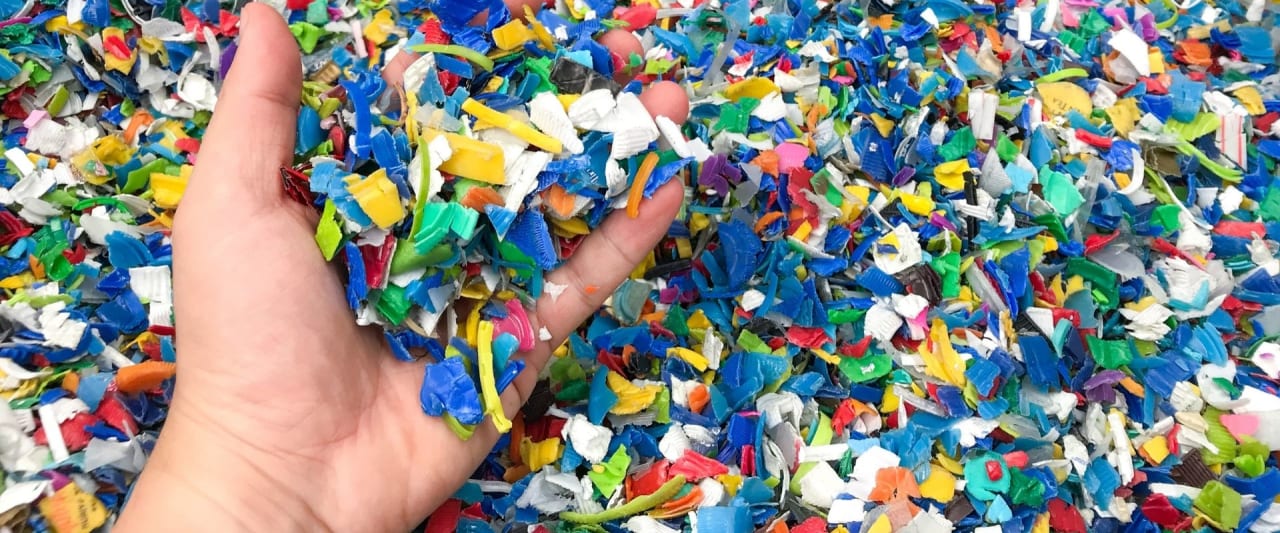
Europlast stands among Europe’s top three suppliers of injection molded plastic container solutions. While HDPE is their primary production material, they’re increasingly incorporating recycled materials from post-consumer sources.
“We have been a climate-neutral company since 2019. We achieved this through many energy-saving campaigns and by switching to 100 percent green electricity,” explains Michael Seifter, Head of Technology and Innovation.
“In harmony with nature” is the processor’s motto, and it plays a role in every decision. Recycling, the CO2 footprint and, above all, the energy efficiency of the company’s own production are important focuses. “We try to produce in a way that conserves resources and has as little impact on the environment as possible. That’s why we impose these requirements on our production machines. And we have found a partner in spirit here, ENGEL.”
Driving Energy Efficiency Forward
The spacious production floor houses an impressive array of ENGEL duo injection molding machines. These aren’t your standard machines – the duo series inherently offers significantly lower energy consumption compared to other machine types. How? Through smart design features like fast clamping units with low moving masses, short-stroke cylinders, optimized mold movement, and ecodrive servo-hydraulic systems that adjust pump output based on actual demand. During cooling phases when the machine is stationary, the motors idle, saving energy.
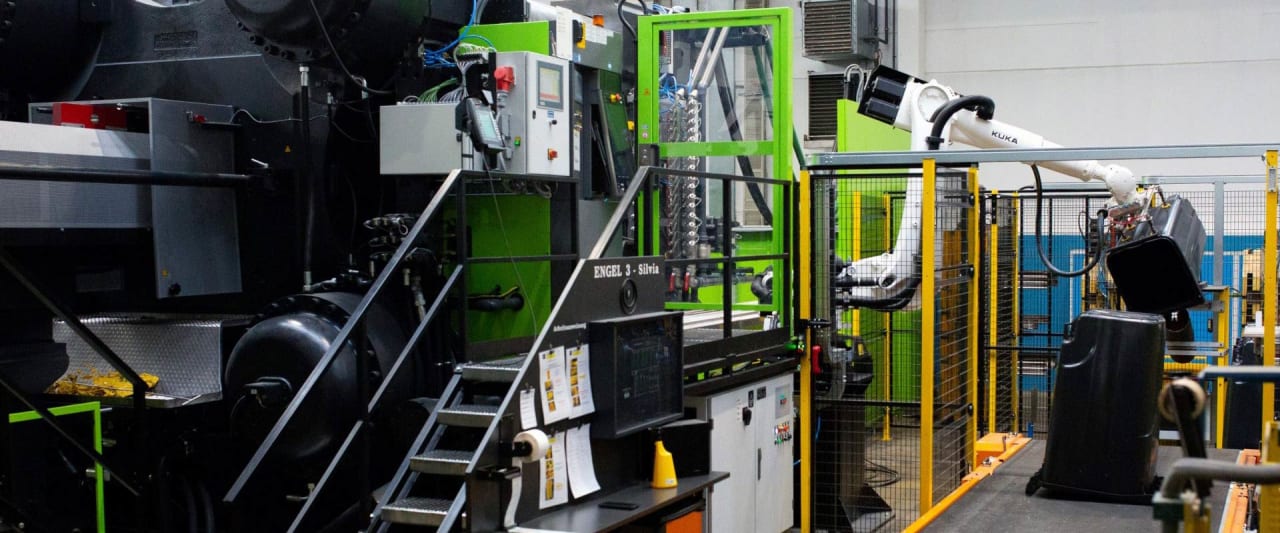
Since beginning their partnership in 2004, ENGEL has continuously tailored their machines to Europlast’s specific requirements. For instance, the injection units were adapted for the lower injection pressures required by Europlast’s cascade control system. Their newest acquisition, a duo 4000 delivered in 2020, features an electric plasticizing drive that further reduces energy consumption. Including all auxiliaries and automation, the total energy requirement per cycle comes in at less than 11 kWh.
“Thanks to their great energy efficiency, the ENGEL duo machines pay for themselves in less than three years,” Seifter notes – a win for both sustainability and the bottom line.
When Precision Equals Safety
The technical demands placed on fruit crates are remarkable. “During apple harvesting, up to five tons of weight are stacked, 14 boxes on top of each other,” explains Seifter. These towers can reach heights of ten to twelve meters. Despite their thin-wall design, even the bottom crate must remain perfectly stable under this immense pressure.
Depending on the apple variety, crates have shot weights between 25 and 40 kg. Uniform injection and consistent weight are absolutely critical to ensure complete cavity filling despite the long mold cores, and to achieve repeatable wall thickness distribution. Only this level of precision ensures the boxes can bear the load and safely interlock when stacked.
The clamping unit plays a crucial role in performance and efficiency too:
“The ENGEL duo machines are some of the fastest machines on the market. The opening, closing and locking times are unproductive. The duo is very fast here, and that is directly reflected in the cycle time,” explains Seifter, emphasizing another key advantage: “Fruit crates are not pre-produced for stock, but on-demand at harvest time. I have to be able to rely on the machine being available exactly when I need it.”
The Recycled Material Challenge
Using recycled materials is a cornerstone of resource-saving production. While food safety regulations currently prevent using recycled content in fruit crates, the proportion is steadily increasing for recycling containers worldwide – though slower than Seifter would like.
“The containers with a high recycled material content of up to nearly 100 percent are more expensive because we have an upcycling process upstream and far tighter quality control is required. Politically, however, there is definitely the will in some countries to invest more money in containers with recycled content.”
The challenges differ between product lines. Fruit crates primarily need structural stability, as climatic conditions don’t vary much during harvest. Waste bins, however, face extreme conditions – from -30°C Scandinavian winters to +45°C Middle Eastern heat.
The raw materials for recycling containers come from post-consumer waste streams, supporting circular economy principles. This is where the injection molding machines truly prove their worth – they must compensate for the slightly fluctuating material consistency with high precision to maintain product quality.
Flexibility Meets Precision
The exceptional process stability of ENGEL machines provides another advantage for Europlast’s contract manufacturing division, which accounts for about 30% of production and continues to grow. Their production floor features 13 injection molding machines with clamping forces ranging from 200 to 4000 tons.
“ENGEL supports us excellently with tailored solutions to empower our flexible production,” says Seifter. “We can also run smaller shot weights on large machines in between. Great consistency in the injection molding process helps us here, too.”
Looking ahead, these “partners in spirit” will continue collaborating on new projects focused on meeting CO2 reduction goals.
“We will continue to work on energy efficiency and ramp up the recycled material content,” says Seifter, who particularly hopes to soon be able to use recycled materials for fruit crates too. “Our customers’ wishes and requirements are our motor and fuel,” adds Werner Sucharda, Sales Manager Austria East at ENGEL.
“This means that we can always achieve the best possible results for our customers with innovative machine strategies and technologies.”
Apple crates in use during harvesting. The size of the apple drives the box design. The smaller the apple, the higher the fill weight, and the more stable the design must be.
Waste container production on an ENGEL duo 4000: recycled material from post-consumer sources is processed here.