Gravimetric vs volumetric dosing: what's the difference?
Volumetric dosing measures material by volume, gravimetric dosing weighs it. How each works, how accurate it is and which to choose for plastics processing.
(updated )
The short answer: a volumetric doser adds masterbatch or additive by volume. Its screw turns at a set speed and delivers whatever weight that volume happens to hold. A gravimetric doser weighs what it adds and adjusts the screw until the weight is right. Volumetric dosing is cheaper and simpler. Gravimetric dosing keeps the mixing ratio when the material’s bulk density changes, so parts stay consistent and less masterbatch is wasted.
Volumetric and gravimetric dosing compared
| Volumetric | Gravimetric | |
|---|---|---|
| What it measures | Volume: screw revolutions | Weight: a load cell |
| Accuracy | Right only while the bulk density stays the same | Keeps the set ratio and corrects itself |
| Calibration | By hand: weigh a sample after every material or batch change | Automatic |
| Cost | Lower | Higher |
| Records | None | Material use per component and per shift |
| Best for | One material with even granules, low-cost additives | Expensive masterbatch, regrind, frequent material changes, traceability |
How volumetric dosing works
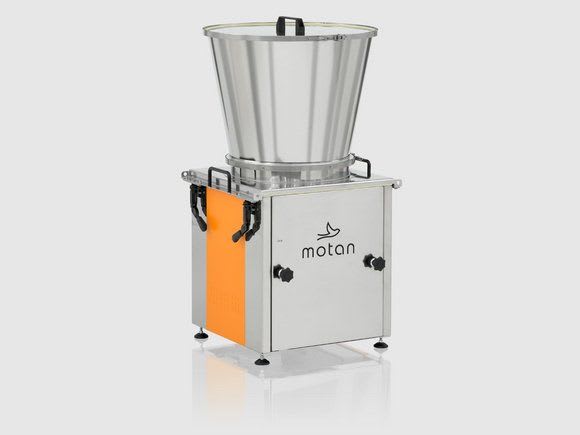
A dosing screw under a small hopper turns at a set speed and feeds material into the machine throat. To set it up, the operator runs the screw for a fixed time, weighs what comes out, and adjusts the speed until the weight matches the recipe.
That setting only holds while every litre of material weighs the same. Bulk density changes when:
- a new batch of masterbatch has slightly different granules
- regrind is added, because ground flakes pack differently from pellets
- the hopper level changes, which changes how the material settles
When the density drops, the screw delivers less material than set, and colour or additive levels drift. To stay on the safe side, many processors set volumetric dosers a little high, which wastes masterbatch on every shot.
How gravimetric dosing works
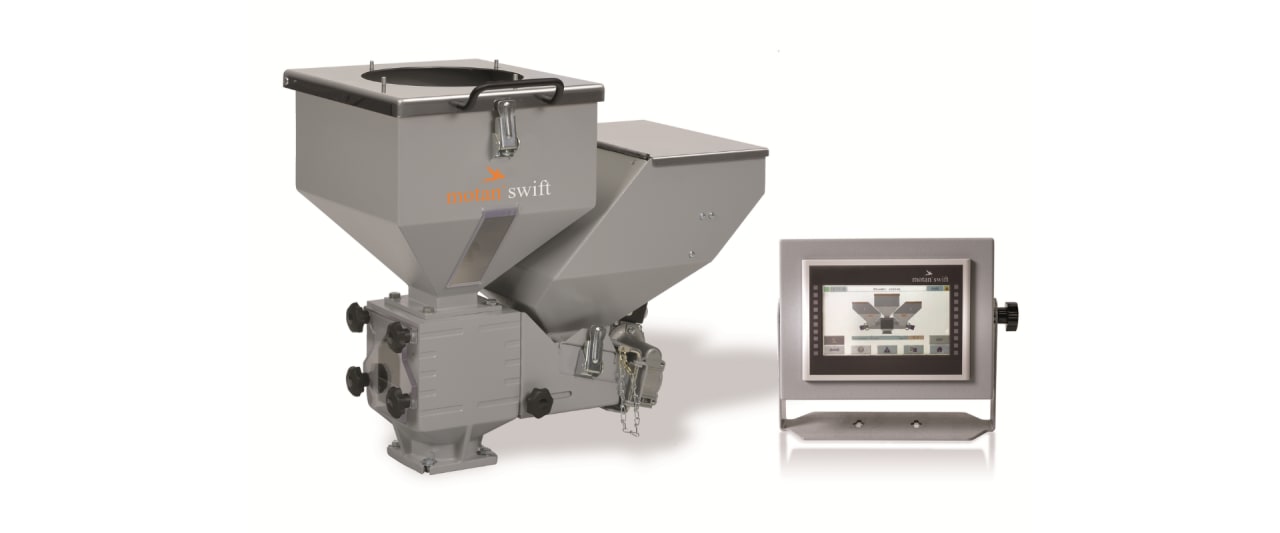
A gravimetric doser has load cells that weigh the material, so it measures what actually goes in. There are two main types:
- Loss-in-weight: the hopper sits on a load cell. The controller watches how fast the weight drops and speeds the screw up or slows it down to hold the set rate. Common for continuous processes such as extrusion, and for single additives on injection moulding machines.
- Batch (gain-in-weight): each component is weighed into a weigh bin in turn, then the batch is mixed and released. Common for blending several components, such as virgin material, regrind and masterbatch, on injection moulding and blow moulding machines. The order in which components are dosed affects accuracy.
Because the doser knows the weights, it can also log consumption per material, which helps with costing and traceability.
Which one to choose
Volumetric dosing is enough when:
- you process one material with even granules and little or no regrind
- the additive is cheap, so slight over-dosing costs little
- the part doesn’t need tight colour or additive control
Choose gravimetric dosing when:
- masterbatch or additives are a significant cost: holding the ratio exactly usually pays for the doser through saved masterbatch
- you use regrind or change materials often
- colour consistency or additive levels matter to your customer, for example in packaging, medical or technical parts
- you need records of material use
The dosing screw also has to suit the material and the throughput. See how to choose a dosing screw and how material throughput affects dosing.
Dosing equipment from GreenTech
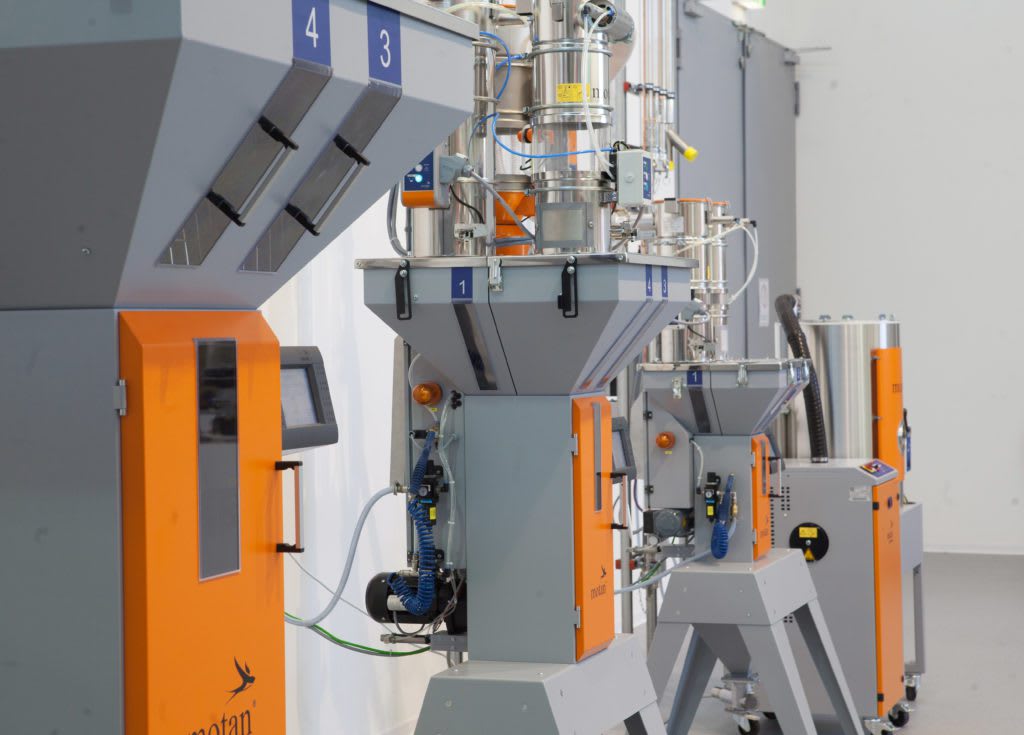
GreenTech supplies, installs and services volumetric and gravimetric dosing and blending units from motan, along with dryers, conveying and the rest of the ancillary equipment around the machine. Contact us to work out which dosing set-up suits your process and materials.